 Loading... Please wait...

Blog
Recent Posts
Why the PiCAN-M with SMPS Cannot Power Raspberry Pi 5 — and the Simple Workaround
Posted by on
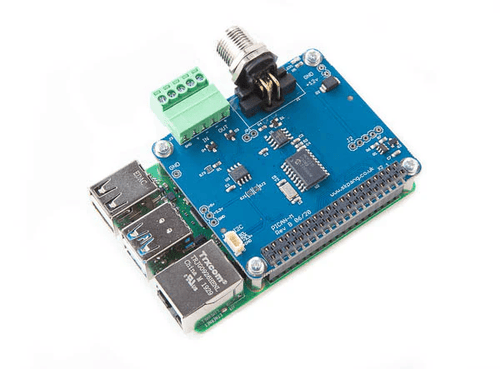 The PiCAN-M HAT from Copperhill Technologies is a specialized interface developed exclusively for marine applications and specifically targets NMEA 2000 networks. NMEA 2000 is the standard backbone for modern marine electronics, used to interconnect engines, chart plotters, sensors, and onboard monitoring systems. In its standard version without SMPS, the PiCAN-M HAT is powered directly from the Raspberry Pi and is intended for installations where the Raspberry Pi already receives stable power from the vessel’s electrical system. This configuration emphasizes reliable NMEA 2000 communication and electrical robustness, making it well suited for marine development, diagnostics, and fixed installations with controlled power distribution.
The PiCAN-M HAT variant with integrated SMPS is designed for marine environments where a higher-voltage onboard supply, typically 12 V or 24 V, is readily available. The onboard switched-mode power supply converts this voltage to a regulated 5 V rail for the Raspberry Pi, reducing wiring complexity and eliminating the need for an external DC-DC converter. This approach is particularly useful in compact marine enclosures and retrofit projects. As marine electronics and Raspberry Pi models evolve, overall system power requirements should be evaluated carefully to ensure stable operation, especially when higher-performance Raspberry Pi boards are used alongside NMEA 2000 networks.
However, a limitation arises when using the SMPS version of the PiCAN-M HAT with a Raspberry Pi 5. The onboard SMPS (switched-mode power supply) is rated for a maximum output current of 3 A, whereas the Raspberry Pi 5 is designed to draw up to 5 A under load. As a result, powering a Raspberry Pi 5 directly from the PiCAN-M SMPS can lead to undervoltage conditions and unstable operation. To address this, we have developed a reliable workaround that uses an external DC/DC converter to meet the higher current demands while still retaining full NMEA 2000 functionality.
For more information, see also our post Testing PICAN CAN Bus HATs with the Raspberry Pi 5...
Please note that the workaround described below is a conceptual solution at this stage. It is being shared in response to customer requests and has not yet undergone full validation or extended testing. Additional verification and refinements will follow. Until then, implementing this approach is done at your own risk.
The PiCAN-M board—whether equipped with SMPS or not—includes a dedicated power section that allows you to access or supply 12 VDC, as illustrated here:
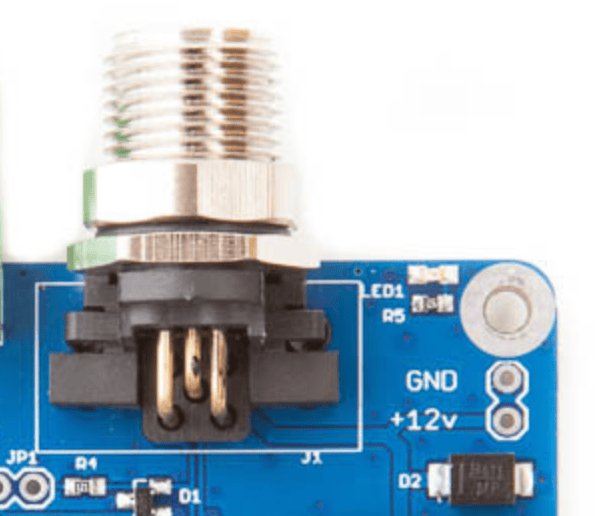
This connection point can be used to feed the 12–24 VDC input of an external DC/DC converter, as shown in the following image.
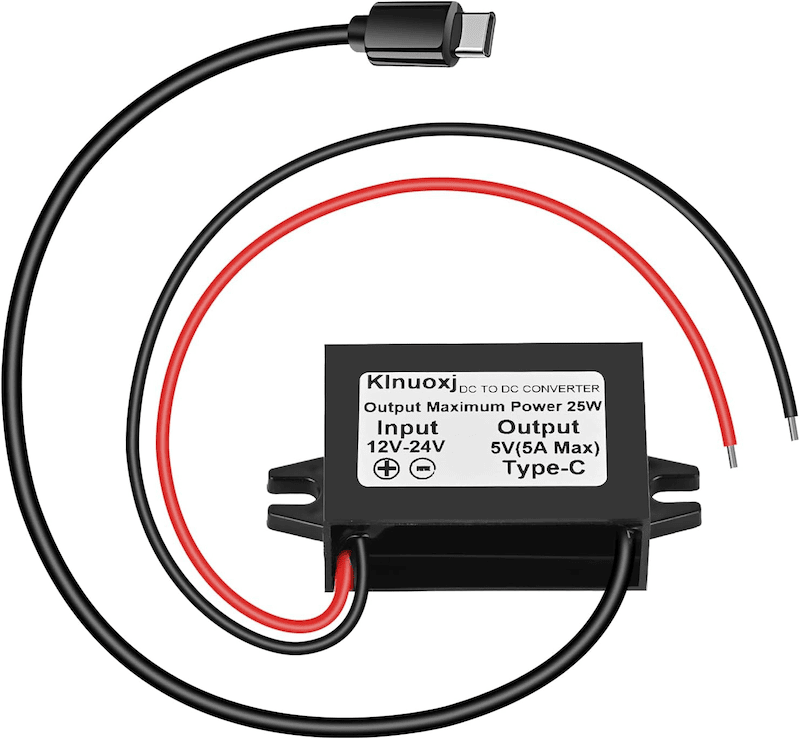
The selected converter provides a regulated 5 V output via a USB-C connector, which plugs directly into the Raspberry Pi 5 and supplies the required current independently of the PiCAN-M’s onboard power circuitry.
This approach allows the PiCAN-M to remain focused on NMEA 2000 communication while the Raspberry Pi 5 is powered by a converter sized appropriately for its higher current demands. For ordering information and detailed technical specifications of the recommended DC/DC converter, please refer to DC 12V/24V to 5V USB C Step Down Converter.
Turn Your Raspberry Pi into a Smart Marine Hub with OpenPlotter and Signal K
The world of marine electronics is evolving. Once dominated by expensive, closed systems with limited flexibility, there’s now a shift toward something more open, more personal, and—frankly—more exciting. At the heart of this movement is OpenPlotter, a Linux-based operating system tailored for Raspberry Pi computers, and Signal K, an open data standard designed to bring [...]
Exploring the PiCAN Series and SocketCAN: A Powerful Duo for Raspberry Pi CAN Bus Applications
The PiCAN series from Copperhill Technologies brings robust CAN Bus capabilities to Raspberry Pi systems, providing essential tools for automotive, industrial, and robotics projects. These boards are compact, powerful, and compatible with SocketCAN, the standard CAN interface for Linux systems. Whether you’re developing diagnostic tools, data loggers, or real-time communication systems, PiCAN HATs offer a [...]
Building a Marine Data Logger with Raspberry Pi and PiCAN-M: A Step-by-Step Guide
Introduction Marine electronics don’t have to be expensive or proprietary. With a Raspberry Pi and the PiCAN-M HAT from Copperhill Technologies, you can build a powerful and fully customizable data logger for your boat. This project will show you how to: Capture NMEA 0183 and NMEA 2000 data, Visualize real-time data using Signal K and OpenPlotter, Log sensor values [...]
Comprehensive Guide to OpenPlotter and Signal K
OpenPlotter is an open-source marine navigation and data integration platform designed for use with Raspberry Pi. It provides a powerful toolkit for sailors, researchers, and DIY enthusiasts who want to collect, process, and visualize data from various maritime sources. A core component of OpenPlotter is Signal K, an open data format and server for marine [...]
NMEA 2000: A Comprehensive Overview and Integration with Copperhill PiCAN-M Series
NMEA 2000 (National Marine Electronics Association 2000) is a standardized communication protocol used in the marine industry to facilitate seamless data exchange between electronic devices onboard vessels. Based on the Controller Area Network (CAN) protocol (ISO 11898), NMEA 2000 enables efficient, real-time data sharing between sensors, navigation instruments, and control systems. This standard has been [...]