 Loading... Please wait...

Recent Posts
Why Teensy Is One of the Best Microcontrollers for CAN Bus Applications
Posted by on
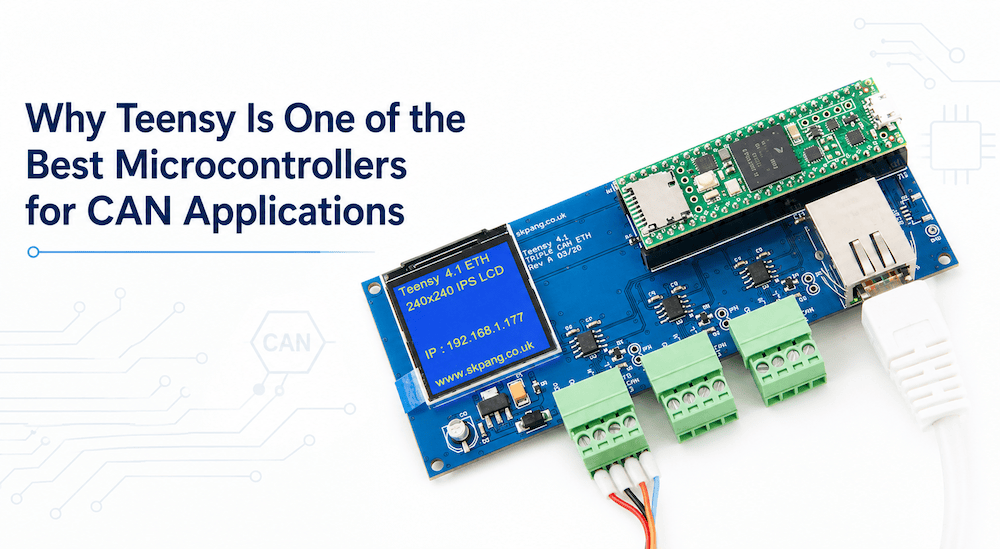 When engineers begin working with Controller Area Network (CAN) systems, one of the first questions is usually, "Which microcontroller should I use?" The answer depends on the application, but one platform consistently stands out for its combination of performance, flexibility, and ease of development: Teensy.
Originally developed by PJRC, the Teensy family has earned an excellent reputation among hobbyists, professional developers, and embedded systems engineers alike. While the boards are often associated with Arduino projects, they offer considerably more processing power than many traditional Arduino-compatible boards while maintaining compatibility with the Arduino development environment.
For CAN Bus development—whether the application involves automotive electronics, industrial automation, marine systems, or heavy-duty vehicle networks such as SAE J1939—the Teensy platform offers several compelling advantages.
Accelerate CAN Development with Teensy-Based Hardware
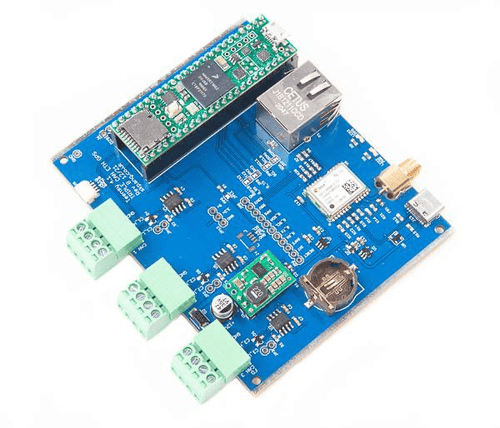 Whether you're developing a CAN Bus monitor, an SAE J1939 gateway, a CAN FD data logger, or a sophisticated embedded controller, the Copperhill Technologies Teensy product line provides professional-grade hardware that gets your project moving quickly. Built around the powerful Teensy 4.0 and 4.1 microcontrollers, these development boards combine high-performance ARM processing with specialized CAN, CAN FD, Ethernet, GNSS, LCD, and USB interfaces. Instead of spending weeks designing custom hardware, you can focus immediately on firmware development and application testing using proven, ready-to-use platforms.
From Triple CAN Bus boards and CAN FD breakouts to ECU simulators, NMEA 2000 solutions, training boards, and Ethernet-enabled gateway platforms, the Copperhill Technologies Teensy family supports applications across automotive, industrial, agricultural, and marine industries. Fully compatible with the Arduino IDE and backed by extensive documentation and programming examples, these products offer an ideal foundation for both rapid prototyping and commercial product development. Whether you're learning CAN technology or building your next professional embedded system, the Copperhill Technologies Teensy ecosystem delivers the performance, flexibility, and reliability engineers demand.
High Performance Where It Matters
Modern CAN applications rarely consist of simply transmitting and receiving a few messages.
Today's embedded systems frequently need to:
-
Process hundreds or thousands of CAN frames per second
-
Execute protocol stacks such as SAE J1939, CANopen, or NMEA 2000
-
Log traffic to an SD card
-
Drive LCD displays
-
Handle Ethernet or USB communication
-
Perform real-time calculations
-
Interface with multiple sensors simultaneously
The Teensy 4.x family is particularly well suited for these tasks. Powered by an ARM Cortex-M7 processor running at up to 600 MHz, it delivers computational performance that was previously reserved for much larger embedded systems. The generous RAM and Flash memory allow developers to implement sophisticated communication stacks without constantly worrying about memory limitations.
Arduino Compatibility Without the Limitations
One of the biggest attractions of the Teensy platform is that it combines professional hardware with the simplicity of the Arduino ecosystem.
Most Arduino libraries compile without modification, allowing developers to leverage a vast software ecosystem while benefiting from dramatically higher processing performance.
This is especially valuable for engineers who already have experience with Arduino but need additional speed and I/O capabilities for demanding CAN applications.
Programming is performed directly through USB, eliminating the need for dedicated programmers or complicated toolchains. This significantly shortens the learning curve while maintaining professional-level capabilities.
Excellent CAN Bus Support
Unlike many inexpensive microcontroller boards that require extensive hardware modifications or software workarounds, Teensy has become a favorite platform for CAN development.
Depending on the model, Teensy boards support one or multiple CAN controllers, making them suitable for applications ranging from simple CAN monitoring to sophisticated gateway implementations.
Typical projects include:
-
CAN Bus analyzers
-
Data loggers
-
ECU simulators
-
Vehicle gateways
-
Diagnostic tools
-
Industrial controllers
-
Marine electronics
-
Agricultural machinery
-
Construction equipment
The platform is equally suitable for Classical CAN and CAN FD applications when paired with the appropriate transceivers.
Multiple CAN Channels Open New Possibilities
Many real-world systems require communication on more than one CAN network.
Examples include:
-
Bridging two vehicle networks
-
Translating between different protocols
-
Logging traffic while simultaneously transmitting messages
-
Connecting legacy CAN networks with CAN FD networks
-
Building protocol gateways
This is where Teensy truly shines.
Several development boards integrate multiple CAN interfaces, allowing engineers to develop sophisticated gateway and monitoring applications without adding external processors.
Having multiple CAN channels on a single processor greatly simplifies synchronization and reduces overall system complexity.
Real-Time Performance
CAN communication is inherently real-time.
Messages often need to be processed within milliseconds, sometimes even microseconds.
The Teensy architecture provides ample processing headroom to:
-
Handle interrupt-driven CAN communication
-
Execute complex protocol stacks
-
Perform filtering
-
Calculate checksums
-
Update graphical displays
-
Log data
-
Manage communication with a PC
—all without compromising bus timing.
For protocols such as SAE J1939, where multiple Parameter Groups may arrive in rapid succession, this additional processing margin can make software development considerably easier.
A Platform That Grows With Your Project
Many embedded projects start small but quickly become more complex.
A simple CAN monitor may evolve into:
-
a protocol analyzer,
-
an ECU simulator,
-
a data logger,
-
a gateway,
-
or a complete diagnostic system.
The Teensy ecosystem accommodates this growth remarkably well.
Additional peripherals such as Ethernet, displays, SD card storage, GPS receivers, Wi-Fi modules, or USB interfaces can often be added without changing the fundamental software architecture.
This protects the initial software investment and allows projects to evolve naturally.
An Extensive Range of CAN Development Hardware
One of the strongest advantages of the Teensy ecosystem is the availability of specialized hardware designed specifically for CAN applications.
The Copperhill Technologies product line extends the capabilities of standard Teensy boards with a wide variety of development platforms, including:
-
Triple CAN Bus boards
-
CAN FD development boards
-
CAN/LIN breakout boards
-
CAN FD to USB converters
-
OBD-II ECU simulators
-
NMEA 2000 development boards
-
Training boards
-
Ethernet-enabled CAN platforms
-
Integrated LCD display solutions
-
GPS-enabled development systems
These products eliminate much of the hardware design effort typically required when starting a CAN project. Instead of designing custom PCBs from scratch, engineers can immediately focus on firmware development and application logic.
Many of these boards combine multiple communication interfaces—including Classical CAN, CAN FD, Ethernet, USB, SD card storage, LCD displays, and GNSS—into compact development platforms suitable for both rapid prototyping and production-oriented software development.
Ideal for Learning and Professional Development
The Teensy platform occupies an interesting middle ground.
It is approachable enough for students and hobbyists, yet powerful enough for professional engineers developing commercial embedded products.
This combination makes it an excellent choice for:
-
Learning CAN Bus fundamentals
-
Developing SAE J1939 applications
-
Prototyping industrial controllers
-
Building CAN FD gateways
-
Creating diagnostic equipment
-
Developing marine electronics
-
Research and laboratory automation
-
Product development
Because development takes place within the familiar Arduino IDE, engineers can focus on understanding the communication protocols instead of spending weeks learning a complex development environment.
Long-Term Value
Selecting a microcontroller is about more than just processor speed.
Long-term success depends on:
-
Software support
-
Library availability
-
Community knowledge
-
Hardware ecosystem
-
Expandability
-
Documentation
-
Availability of compatible accessories
The Teensy ecosystem scores highly in all of these areas.
When combined with purpose-built CAN development hardware, it provides a platform capable of supporting projects ranging from educational experiments to sophisticated industrial applications.
Conclusion
For engineers working with CAN Bus technologies, Teensy offers an exceptional balance of processing power, ease of development, flexibility, and expandability.
Its compatibility with the Arduino ecosystem makes it accessible, while its high-performance ARM architecture provides the computational resources required by modern communication protocols such as SAE J1939, CAN FD, CANopen, and NMEA 2000.
When paired with specialized CAN hardware such as the extensive range of Teensy-based development boards from Copperhill Technologies, the platform becomes an extremely capable foundation for professional CAN Bus development. Whether you're building a simple CAN monitor or a multi-network gateway with Ethernet, CAN FD, and data logging, Teensy provides the performance and flexibility to grow with your project.
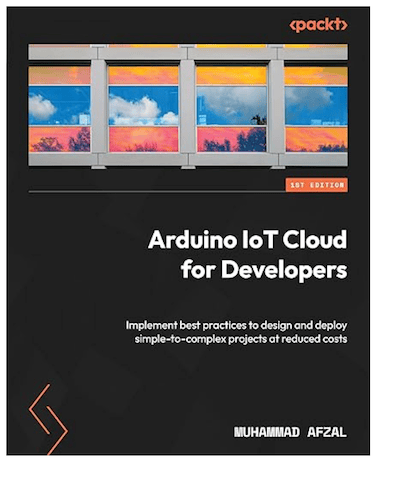 Arduino IoT Cloud for Developers: Implement best practices to design and deploy simple-to-complex projects at reduced costs
Master the essential concepts of the Internet of Things (IoT) and build intelligent connected applications using the Arduino IoT Cloud, Arduino and ESP32 development boards, Amazon Alexa Voice Assistant, and MQTT—all through practical, hands-on projects.
Key Features
- Learn the Arduino IoT Cloud from the ground up with step-by-step, hands-on projects
- Develop a solid understanding of IoT application design, from fundamental concepts to advanced cloud integration
- Explore the Arduino IoT Cloud's features and capabilities for rapid prototyping and commercial IoT deployments
- Includes a complimentary PDF eBook with every print or Kindle purchase
Book Description
The Arduino IoT Cloud provides a powerful and accessible platform for developing connected devices while significantly reducing the time and cost required for prototyping, deployment, and maintenance. Whether you are a hobbyist, student, or professional developer, this practical guide takes you step by step through the complete Arduino IoT Cloud ecosystem.
Beginning with the fundamentals of IoT and cloud-connected devices, the book gradually introduces more advanced concepts through real-world projects using Arduino and ESP32 hardware. Along the way, you will learn how to connect devices to the cloud, monitor and control hardware remotely, integrate voice control with Amazon Alexa, and communicate efficiently using the MQTT protocol. By the end of the book, you will have the knowledge and practical experience needed to design, prototype, and deploy reliable IoT applications for both personal and commercial projects. More information...