 Loading... Please wait...

Recent Posts
Why Embedded Engineers Need Raspberry Pi for CAN Bus Development
Posted by on
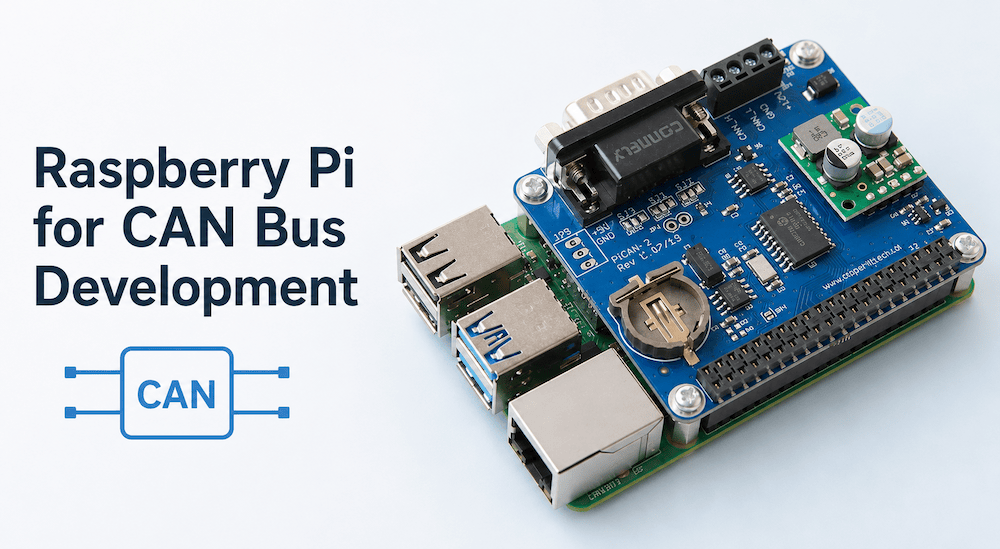 The Raspberry Pi has earned its reputation as one of the most versatile embedded computing platforms ever created. Originally introduced as an educational computer, it has evolved into a serious engineering tool used for industrial automation, robotics, automotive development, data acquisition, and IoT applications. For engineers working with CAN Bus and CAN FD networks, adding a PiCAN interface transforms the Raspberry Pi into a compact, affordable, and highly capable development platform.
Whether you are designing an ECU, developing industrial controllers, testing CAN networks, or creating data logging applications, a Raspberry Pi equipped with a PiCAN board provides functionality that traditionally required much more expensive hardware.
More Than Just a Single-Board Computer
The Raspberry Pi offers an impressive combination of processing power, storage, networking, and software flexibility. Running a full Linux operating system gives developers access to thousands of software packages, programming languages, debugging tools, and networking utilities.
Unlike many microcontroller platforms, the Raspberry Pi allows engineers to:
-
Compile software directly on the target
-
Run graphical user interfaces
-
Store large amounts of data
-
Connect through Ethernet or Wi-Fi
-
Access cloud services
-
Perform remote debugging
-
Run multiple applications simultaneously
When CAN communication is added, the platform becomes an excellent laboratory for embedded systems development.
Why CAN Bus Development Benefits from Linux
Most production embedded systems run on microcontrollers, but development often benefits from using a more powerful environment.
Linux provides:
-
Powerful scripting capabilities
-
Easy software installation
-
Standard networking tools
-
Built-in remote access
-
Excellent file system support
-
Native multitasking
-
Comprehensive debugging tools
This allows engineers to focus on application development rather than spending valuable time creating diagnostic utilities from scratch.
Introducing the PiCAN Series
 The PiCAN family of CAN Bus interfaces has become one of the most popular hardware solutions for Raspberry Pi CAN development. Designed specifically for the Raspberry Pi ecosystem, these expansion boards integrate seamlessly with the operating system while providing professional-grade CAN connectivity.
Depending on the model, PiCAN boards support:
-
Classical CAN
-
CAN FD
-
Dual-channel CAN
-
Galvanic isolation
-
GPS receivers
-
Ethernet connectivity
-
Real-time clock functionality
-
Industrial power input options
This flexibility allows engineers to select the hardware configuration that best matches their project requirements.
Rapid Software Development
One of the greatest advantages of Raspberry Pi development is the ability to write applications in virtually any programming language.
Common choices include:
-
C
-
C++
-
Python
-
Rust
-
Go
-
Java
-
Node.js
Python deserves special mention because it allows engineers to quickly prototype CAN applications in only a few dozen lines of code. Ideas can be tested within minutes rather than hours.
Once the concept has been validated, performance-critical software can later be implemented in C or C++ if necessary.
SocketCAN Makes Life Easier
Linux includes SocketCAN, a standardized CAN networking framework that treats CAN interfaces similarly to traditional Ethernet interfaces.
Instead of learning proprietary APIs, developers use standard Linux networking concepts.
Benefits include:
-
Standard driver architecture
-
Numerous open-source utilities
-
Wide community support
-
Easy scripting
-
Integration with existing Linux tools
Utilities such as candump, cansend, cangen, and canplayer become invaluable during development and troubleshooting.
An Excellent CAN Data Logger
Many embedded projects require recording CAN traffic for later analysis.
The Raspberry Pi excels in this role because it combines:
-
Large storage capacity
-
High-speed processors
-
Network connectivity
-
USB support
-
Low power consumption
Developers can easily record millions of CAN messages while simultaneously:
-
Displaying live statistics
-
Uploading data to remote servers
-
Compressing log files
-
Performing real-time analysis
This makes the platform suitable for vehicle testing, industrial diagnostics, agricultural equipment, and laboratory automation.
Gateway Development Made Simple
Many embedded applications act as protocol gateways.
Examples include:
-
CAN-to-Ethernet
-
CAN-to-Wi-Fi
-
CAN-to-MQTT
-
CAN-to-USB
-
CAN-to-Serial
-
CAN-to-Bluetooth
Since the Raspberry Pi already includes many of these communication interfaces, gateway development becomes significantly easier.
A PiCAN board provides the missing CAN interface while Linux handles the remaining communication channels.
Ideal for Industrial Prototyping
Before committing to custom hardware, many engineering teams build functional prototypes using Raspberry Pi systems.
Advantages include:
-
Faster proof-of-concept development
-
Lower development costs
-
Easy hardware expansion
-
Shorter project schedules
-
Rapid software iteration
The software developed on the Raspberry Pi often serves as the foundation for firmware later deployed on dedicated embedded hardware.
CAN FD Ready
Modern automotive and industrial applications increasingly rely on CAN FD.
Several PiCAN models support CAN FD, enabling developers to:
-
Evaluate higher data throughput
-
Experiment with larger payloads
-
Test mixed Classical CAN and CAN FD systems
-
Prepare for next-generation embedded designs
As CAN FD adoption continues to grow, having a flexible development platform becomes even more valuable.
Built for Remote Development
The Raspberry Pi was practically designed for remote engineering.
Developers can access the system using SSH or remote desktop software from anywhere on the network.
This enables:
-
Remote software updates
-
Remote diagnostics
-
Automated testing
-
Continuous integration
-
Long-duration testing without a monitor or keyboard attached
The result is a development platform that can operate unattended for days or weeks.
Affordable Without Sacrificing Capability
Professional CAN development tools can represent a significant investment, especially during the early stages of a project.
A Raspberry Pi combined with a PiCAN board offers an attractive balance between capability and cost. Engineers gain access to a full Linux environment, powerful networking features, extensive software support, and reliable CAN communication—all in a compact platform suitable for both the workbench and field testing.
This accessibility also makes it an excellent choice for students, startups, hobbyists, and professional engineering teams alike.
Beyond Development
Many projects begin as Raspberry Pi prototypes but never leave the platform.
Its stability, Linux ecosystem, and processing capabilities make it suitable for production applications such as:
-
Industrial gateways
-
Machine monitoring
-
Data acquisition systems
-
Fleet telematics
-
Predictive maintenance
-
Remote diagnostics
-
Laboratory automation
In many cases, the Raspberry Pi is no longer just the development platform—it becomes the final product.
Final Thoughts
For embedded engineers working with CAN networks, the Raspberry Pi is far more than an inexpensive single-board computer. Combined with a PiCAN interface, it becomes a professional development platform capable of handling everything from simple CAN message testing to sophisticated CAN FD gateways, industrial data loggers, remote monitoring systems, and advanced network analysis.
The combination of Linux flexibility, powerful processing, extensive software support, and the PiCAN hardware ecosystem allows engineers to prototype faster, test more effectively, and accelerate product development. Whether you are building automotive ECUs, industrial controllers, robotics platforms, or IoT devices, a Raspberry Pi with a PiCAN board deserves a permanent place on your engineering bench.
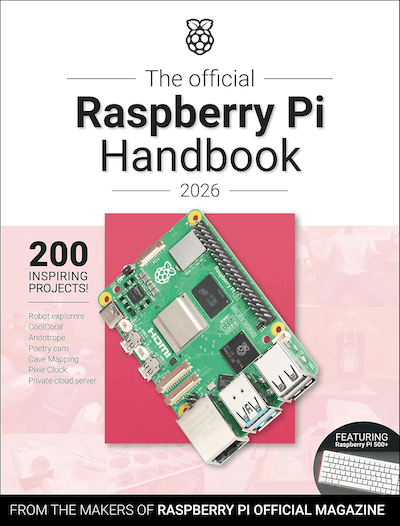 The Official Raspberry Pi Handbook 2026: Astounding projects with Raspberry Pi computers
Discover the incredible versatility of Raspberry Pi with this comprehensive 200-page, full-color guide packed with tutorials, hands-on projects, expert guides, product reviews, and practical tips from the pages of Raspberry Pi Official Magazine.
Whether you're just getting started or already building sophisticated embedded systems, this book offers something for every skill level. From robotics and home automation to retro gaming, media centers, and electronics projects, you'll find plenty of inspiration for your next creation—regardless of which Raspberry Pi model you own.
Inside You'll Discover:
- A complete Getting Started guide for every Raspberry Pi model
- Everything you need to know about the Raspberry Pi 500+
- Dedicated chapters covering the Raspberry Pi Pico 2, Zero 2, Raspberry Pi 5, and Raspberry Pi 4/400
- Inspiring DIY projects to spark your creativity
- Step-by-step instructions for building a Raspberry Pi 5-powered media player
- Exciting robotics projects that let you explore the world on wheels
- How to build a retro gaming system and relive classic horror games
- Expert tutorials, practical advice, and product reviews to expand your Raspberry Pi knowledge
Whether your interests lie in embedded systems, electronics, robotics, home automation, programming, or simply learning what Raspberry Pi can do, this definitive guide is an invaluable addition to your technical library. It's an essential resource for makers, engineers, students, and hobbyists eager to turn ideas into reality. More information...