 Loading... Please wait...

Blog
Recent Posts
Bluetooth 5.0 OBD2 Scanner for iPhone & Android with J1939 Support and Real-Time Engine Diagnostics
Posted by on
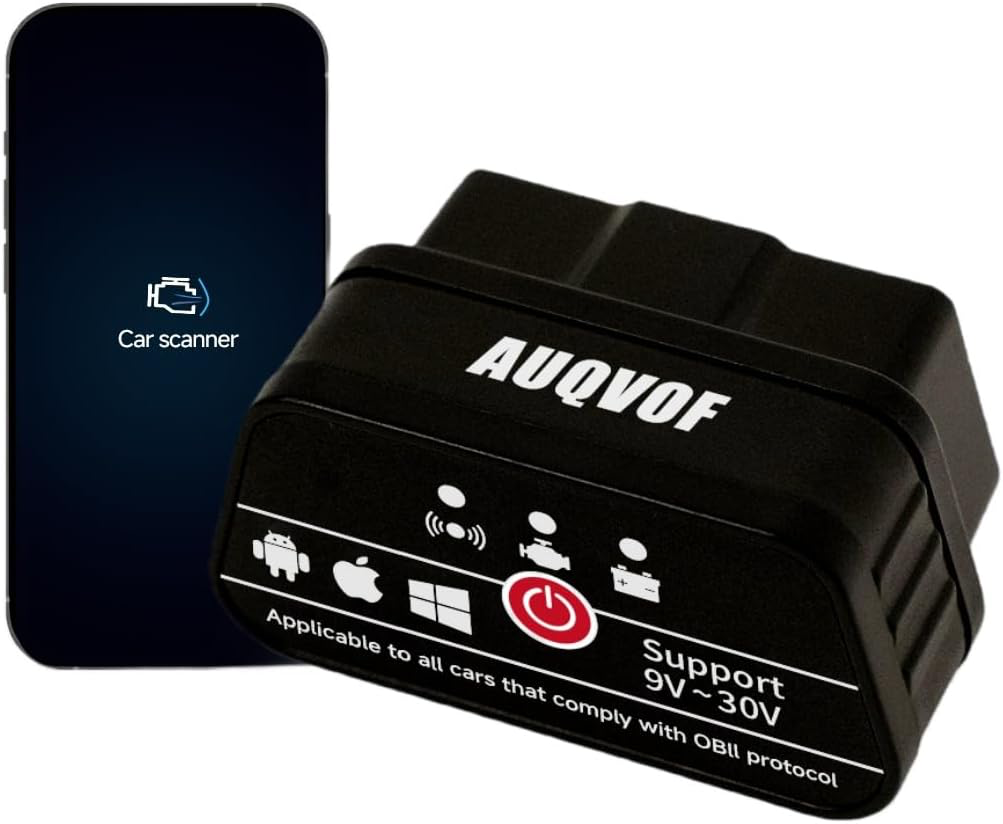 Smartphones have changed the way we diagnose vehicles, and compact Bluetooth OBD2 scanners are now replacing bulky handheld scan tools for many drivers. The Bluetooth Wireless OBD2 Scanner available on Amazon is part of that growing trend. It plugs directly into your vehicle’s OBD-II port and turns your phone or tablet into a real-time diagnostic display capable of reading engine codes, monitoring live sensor data, and helping identify problems before they become expensive repairs.
For everyday vehicle owners, this type of scanner can be surprisingly useful. Instead of driving to a repair shop just to learn why the “Check Engine” light appeared, you can often retrieve the trouble code yourself within minutes. In many cases, the problem may be minor, such as a loose gas cap, while in others it can provide an early warning before a more serious failure develops.
The scanner supports Bluetooth communication and works with both Android and iOS devices through compatible mobile apps. Once paired with a smartphone, the device can display live engine information including RPM, coolant temperature, fuel trim values, oxygen sensor readings, and more. Many users appreciate the ability to watch vehicle data in real time while driving.
One of the biggest advantages of modern Bluetooth OBD2 tools is convenience. Traditional scan tools often require a dedicated display and can cost hundreds of dollars. Compact Bluetooth adapters instead rely on the processing power and screen of your phone. That keeps the hardware small and affordable while still offering surprisingly advanced capabilities.
The product is designed for vehicles that comply with OBD-II standards, which generally means gasoline-powered vehicles sold in the United States from 1996 onward. Many European and Asian vehicles are also supported. According to the product information, the scanner works with multiple OBD-II protocols and supports reading and clearing diagnostic trouble codes as well as monitoring emissions readiness status.
A major selling point is live data monitoring. This is where a Bluetooth scanner becomes more than just a “code reader.” Live data allows drivers and technicians to observe sensor behavior in real time. For example, you can monitor coolant temperature during warm-up, inspect oxygen sensor activity, or observe fuel trims to identify potential vacuum leaks or fueling problems. Advanced users can even create custom dashboards inside compatible apps.
The wireless aspect also makes the device practical for everyday use. Because the scanner communicates via Bluetooth, there are no cables stretching across the cabin. Pairing is typically straightforward: plug the adapter into the OBD-II port, start the vehicle, connect through Bluetooth, and launch the diagnostic app.
Customer feedback for Bluetooth OBD2 scanners in this category is generally positive, especially considering the low price point. Users frequently praise the ease of use, live data functionality, and ability to clear trouble codes after repairs. Some reviews specifically mention that these scanners can save both time and money by avoiding unnecessary visits to repair shops.
However, inexpensive Bluetooth scanners are not perfect. Connectivity reliability can vary depending on the smartphone, vehicle, and app being used. Some customers report flawless operation, while others encounter pairing or compatibility issues. This is one reason why the choice of app matters almost as much as the hardware itself. Popular apps such as Torque, Car Scanner, OBD Fusion, and DashCommand are commonly used with Bluetooth OBD-II adapters.
It is also important to understand the limitations of entry-level scanners. While they are excellent for reading generic engine trouble codes and monitoring live engine data, they usually do not replace professional dealer-level diagnostic equipment. Advanced manufacturer-specific functions such as programming modules, immobilizer coding, or advanced bidirectional control are typically beyond the capabilities of inexpensive Bluetooth adapters.
Still, for the average driver, hobby mechanic, or automotive enthusiast, a compact Bluetooth OBD2 scanner can be one of the most practical automotive tools available. The ability to quickly diagnose warning lights, monitor vehicle health, and understand what is happening under the hood provides a level of insight that was once reserved for professional repair shops.
The growing popularity of Bluetooth OBD-II tools also reflects a broader trend in automotive diagnostics: software increasingly matters as much as hardware. Modern apps provide user-friendly dashboards, code explanations, emissions readiness checks, and even repair suggestions. Combined with a compact Bluetooth adapter, a smartphone becomes a surprisingly capable diagnostic platform.
For anyone looking for an affordable entry into vehicle diagnostics, the Bluetooth Wireless OBD2 Scanner offers a simple and portable solution that can help demystify the increasingly computerized world of modern automobiles. More information...
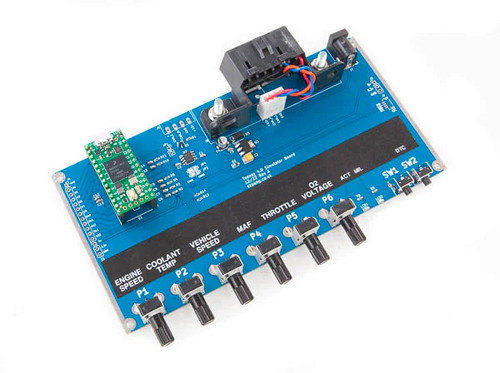 Teensy 4.0 OBDII CAN-Bus ECU Simulator Includes Teensy 4.0
The Teensy 4.0 OBDII CAN-Bus ECU Simulator is a compact automotive development platform designed for engineers, hobbyists, educators, and software developers working with OBD-II diagnostics and CAN-Bus communication. Built around the powerful Teensy 4.0 microcontroller, which comes pre-installed and pre-programmed, the simulator emulates a vehicle Electronic Control Unit (ECU) and generates realistic OBD-II traffic over the CAN bus. The system allows developers to test diagnostic applications, scan tools, telemetry software, and CAN-based embedded systems without requiring access to an actual vehicle. Adjustable potentiometers provide live control over simulated PID values such as engine RPM, throttle position, and vehicle speed, making the platform especially useful for interactive testing and demonstration environments.
The simulator supports standard SAE J1979 OBD-II services and operates at 500 kbps CAN speed, closely matching real-world automotive communication conditions. Thanks to the Teensy 4.0’s 600 MHz ARM Cortex-M7 processor, the platform delivers fast response times and substantial processing power for advanced development projects. The firmware is open source and fully customizable, allowing users to modify existing PIDs or implement their own diagnostic behavior and CAN messaging schemes. The board includes a female OBD-II connector with integrated power support and is compatible with the Arduino IDE, making development accessible even for users without extensive embedded systems experience. Whether used in a classroom, development lab, or prototype environment, the ECU simulator provides a practical and affordable way to explore automotive diagnostics and CAN-Bus communication in depth. More information...