Loading... Please wait...

- Home
- Raspberry Pi
- PICAN CAN Bus FD Board With Real-Time Clock For Raspberry Pi with SMPS


)

Product Description
Free Shipping Within the United States!
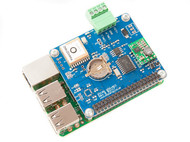
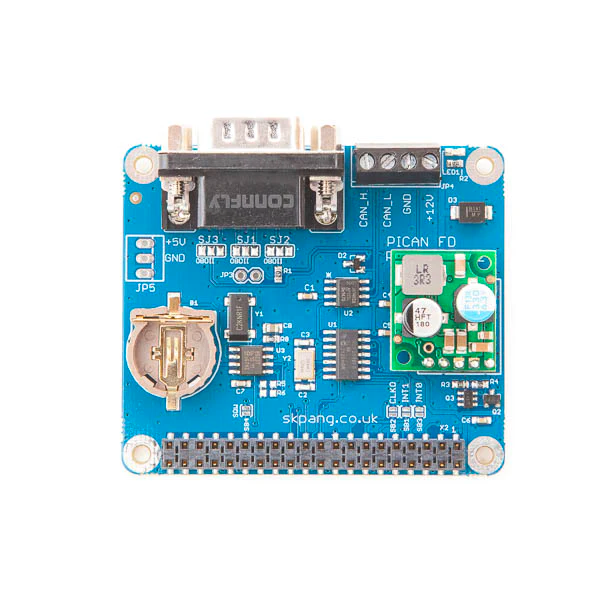
The PiCAN FD board transforms your Raspberry Pi into an advanced CAN FD node, powered by the Microchip MCP2517FD controller and MCP2562FD transceiver, fully compliant with the ISO 11898‑1:2015 standard. It supports classical CAN at arbitration bit rates up to 1 Mb/s and increases data-phase throughput up to 8 Mb/s, making it ideal for demanding applications in automotive, industrial, and embedded systems.
This version includes an onboard 5 V / 3 A switch-mode power supply, capable of accepting input voltages from 7 V to 24 V. The SMPS provides regulated power to both the PiCAN board and the Raspberry Pi, streamlining system power management and eliminating the need for a separate supply. With built-in reverse-polarity protection and efficient power conversion, the board is well-suited for harsh or remote environments where reliability is critical.
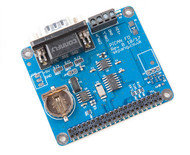
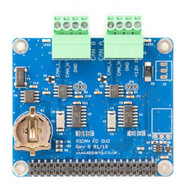
A key feature is the integrated PCF8523 real-time clock with a battery backup, ensuring accurate timekeeping even during power interruptions. This is especially valuable for data logging, message timestamping, and other time-sensitive operations. The board offers both a DB9 connector and a 4-way screw terminal for CAN bus access, along with a jumper-selectable 120 Ω termination resistor and configurable DB9 pinout.
Additional features include an interrupt output on GPIO25 for responsive, event-driven CAN handling, onboard status LEDs for monitoring activity, and footprints for optional serial LCD displays. Four mounting holes follow the Raspberry Pi HAT standard, allowing for easy and secure installation.
Once SPI is enabled in Raspberry Pi OS and the SocketCAN driver is installed, the board is recognized as can0, ready for development using C or Python. Whether you're building next-generation vehicle networks, developing industrial automation systems, or logging high-speed sensor data, this board delivers a complete, powerful, and dependable CAN FD solution.
Features
- Arbitration Bit Rate up to 1Mbps
- Data Bit Rate up to 8Mbps
- CAN FD Controller modes
- Mixed CAN2.0B and CAN FD mode
- CAN2.0B mode
- Conforms to ISO11898-1:2015
- High speed SPI Interface
- CAN connection via standard 9-way sub-D connector or screw terminal
- Compatible with OBDII cable
- Solder bridge to set different configuration for DB9 connector
- 120Ω terminator ready
- Serial LCD ready
- LED indicator
- Four fixing holes, comply with Pi Hat standard
- SocketCAN driver, appears as can0 to application
- Interrupt RX on GPIO25
- RTC with battery backup (battery not included) - Battery size is Lithium CR1220
- Onboard 5VDC 3A SMPS (Switch Mode Power Supply) - Input voltage of 7VDC to 24VDC
Integrated Power and CAN FD Connectivity for Demanding Applications
The PiCAN CAN Bus FD Board with Real-Time Clock and SMPS transforms the Raspberry Pi into a complete CAN FD computing platform while eliminating the need for a separate power supply. In addition to high-speed CAN FD communication with data rates up to 8 Mbps and payloads of up to 64 bytes per frame, this version features an onboard 5 V / 3 A Switch-Mode Power Supply (SMPS) that accepts a wide 7 V to 24 V DC input. This allows both the Raspberry Pi and the PiCAN board to be powered from a single industrial or automotive power source, significantly simplifying wiring and improving system reliability. The efficient SMPS includes reverse-polarity protection, making the board particularly well suited for installation in vehicles, industrial control cabinets, and other demanding environments. Combined with the integrated battery-backed real-time clock and Linux SocketCAN support, the board provides a professional platform for robust CAN FD application development.
The integrated power supply makes this version especially attractive for embedded systems that operate from 12 V or 24 V battery systems, where compactness and reliability are critical. Typical applications include vehicle diagnostics, fleet telematics, industrial automation controllers, CAN FD data loggers, robotics, predictive maintenance systems, and intelligent IoT gateways. Developers can leverage the Raspberry Pi’s networking, storage, and processing capabilities while powering the entire system from a single DC source, reducing external components and installation effort. Whether deployed in a vehicle, on a production floor, or as a remote monitoring station, the PiCAN CAN Bus FD Board with SMPS delivers a streamlined, dependable, and high-performance CAN FD solution for professional embedded applications.
Development Resources
- PiCAN-FD with SMPS User Manual (PDF)...
- PiCAN-FD with SMPS Schematics (PDF)...
- MCP2517FD CAN Controller data sheet (PDF)...
- MCP2562FD CAN transceiver data sheet (PDF)...
- PICAN-FD Python Programming Examples (Github)...
Real-Time Clock Resources
More Resources
- First Look At The MCP2517FD CAN FD Controller...
- Troubleshooting your PiCAN2 CAN Interface Board for Raspberry PI...
- The Raspberry Pi SPI Interface...
- Monitoring SAE J1939 Data Using The Raspberry Pi Plus PiCAN2 CAN Bus Interface Board...
- CAN FD On A Legacy CAN Bus Network Is Not A Good Idea Due To Compatibility Issues...
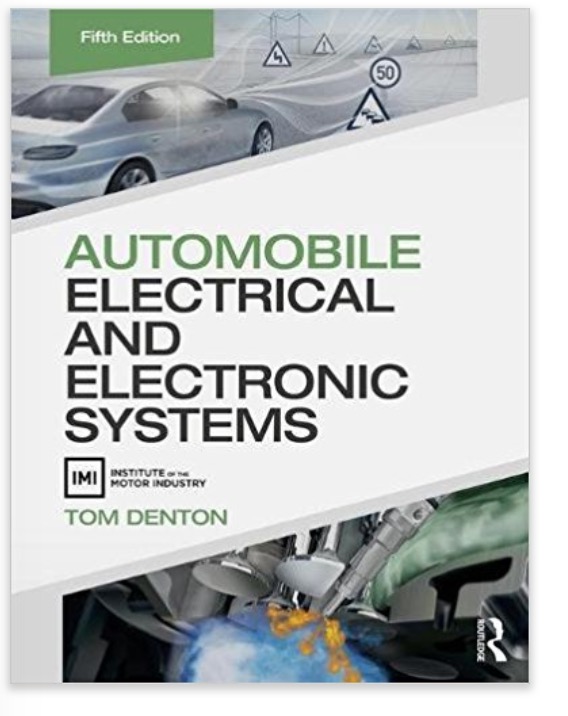 Automobile Electric and Electronic Systems
This textbook will help you learn all the skills you need to pass all Vehicle Electrical and Electronic Systems courses and qualifications.
As electrical and electronic systems become increasingly more complex and fundamental to the workings of modern vehicles, understanding these systems is essential for automotive technicians. For students new to the subject, this book will help to develop this knowledge, but will also assist experienced technicians in keeping up with recent technological advances. This new edition includes information on developments in pass-through technology, multiplexing, and engine control systems. In full colour and covering the latest course specifications, this is the guide that no student enrolled on an automotive maintenance and repair course should be without.
Designed to make learning easier, this book contains:
- Photographs, flow charts, quick reference tables, overview descriptions and step-by-step instructions.
- Case studies to help you put the principles covered into a real-life context.
- Useful margin features throughout, including definitions, key facts and ‘safety first’ considerations.
- Free access to the support website where you will find lots of additional information and useful learning materials: www.automotive-technology.org.