 Loading... Please wait...

Recent Posts
Building NMEA 2000 Devices Has Never Been Easier: Meet the Teensy 4.0 with IPS LCD and NMEA 2000 Connector
Posted by on
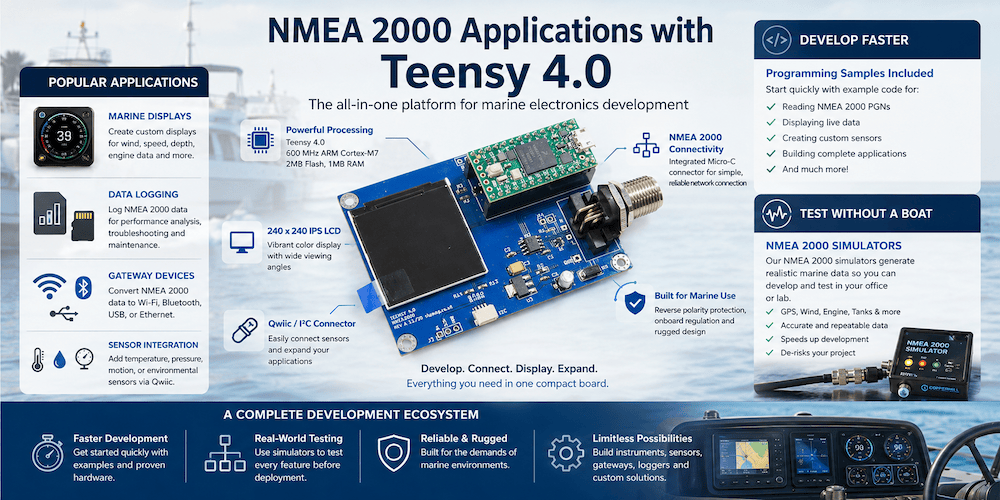 Developing NMEA 2000 devices often involves a frustrating combination of custom hardware, display integration, network connectivity, and endless testing. Many engineers and hobbyists spend more time wiring components together than actually developing their applications.
The Teensy 4.0 with NMEA 2000 Connector and 240×240 IPS LCD changes that equation completely. By combining a powerful microcontroller, integrated NMEA 2000 connectivity, a high-quality color display, and sensor expansion capabilities on a single board, it provides a ready-to-use platform for marine electronics development.
A Powerful Hardware Platform
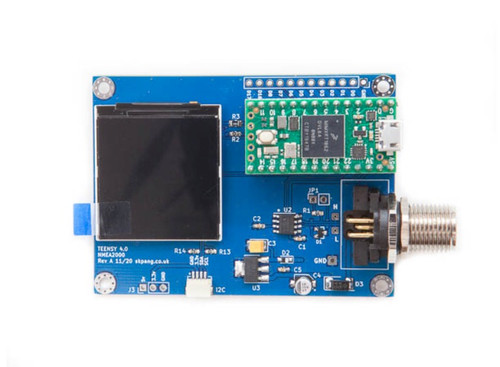 At the heart of the board is the popular Teensy 4.0 microcontroller, powered by NXP's i.MX RT1062 ARM Cortex-M7 processor running at 600 MHz. This makes it one of the fastest microcontroller platforms available for Arduino-compatible development. The processor includes 2 MB of Flash memory and 1 MB of RAM, providing ample resources for sophisticated marine applications.
The processing power is particularly valuable when working with NMEA 2000 networks because modern marine systems often require:
- Simultaneous reception of multiple PGNs
- Real-time display updates
- Sensor integration
- Data logging
- Network gateway functions
- Complex calculations such as navigation, fuel management, and performance monitoring
Unlike many lower-performance microcontrollers, the Teensy 4.0 can easily handle these tasks simultaneously while maintaining responsive user interfaces.
Integrated NMEA 2000 Connectivity
One of the board's biggest advantages is its built-in Micro-C connector for direct connection to an NMEA 2000 network. The board can receive power directly from the NMEA 2000 backbone and includes an onboard voltage regulator with reverse-polarity protection for rugged marine operation.
Additional features include:
- Native NMEA 2000 connectivity
- Integrated CAN interface
- 120-Ohm termination resistor support
- Direct connection to existing marine networks
- Compatibility with chartplotters, sensors, autopilots, and engine monitoring systems
This means developers can connect the board directly to a vessel's network and immediately begin monitoring or transmitting NMEA 2000 data.
Built-In IPS Color Display
The integrated 1.54-inch IPS TFT display provides a crisp 240×240-pixel color interface with excellent viewing angles. Unlike traditional TFT displays that become difficult to read when viewed from the side, IPS technology delivers clear visibility from virtually any angle.
The display is ideal for:
- Wind instruments
- Engine monitoring
- Tank level displays
- GPS data presentation
- Sensor dashboards
- Diagnostic tools
- Custom marine instruments
Because the display is already integrated into the hardware, developers can focus on software functionality instead of worrying about display compatibility and wiring.
Expand Your System with Qwiic Sensors
Marine projects often require additional environmental or operational data. To simplify expansion, the board includes a Qwiic-compatible I²C connector that allows plug-and-play integration of numerous sensors.
Possible additions include:
- Temperature sensors
- Pressure sensors
- Humidity sensors
- Motion sensors
- Accelerometers
- Magnetometers
- Environmental monitoring devices
This capability makes it easy to develop custom NMEA 2000 sensor nodes without designing additional hardware.
Programming Samples Get You Started Quickly
Powerful hardware is only useful if developers can get productive quickly. One of the major advantages of this platform is the availability of programming examples and demonstration code.
Instead of starting from a blank screen, users can build upon existing software examples that demonstrate:
- Reading NMEA 2000 PGNs
- Displaying live network data
- Building marine instrumentation
- Creating custom sensors
- Interfacing external devices
- Developing complete NMEA 2000 applications
For many developers, these examples dramatically reduce development time and eliminate much of the trial-and-error associated with learning the NMEA 2000 protocol.
Whether you are building a simple display or a sophisticated marine monitoring system, working from proven example code provides a significant head start.
Testing Without a Boat: NMEA 2000 Simulators
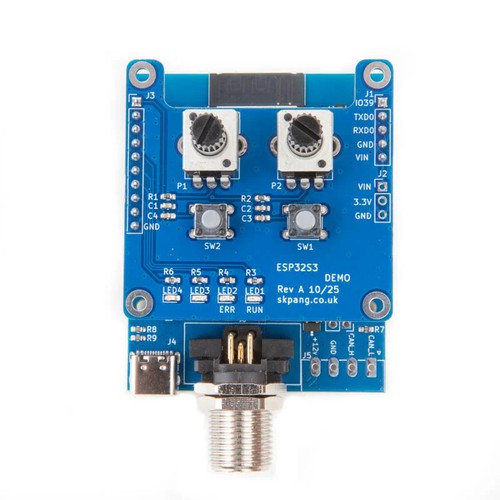 One of the biggest challenges in marine electronics development is testing. Access to a complete vessel network is not always possible, and waiting until installation day to test software can be both expensive and frustrating.
This is why Copperhill Technologies also offers dedicated NMEA 2000 simulators that generate realistic NMEA 2000 traffic for development and testing.
The simulators can generate common marine data including:
- GPS information
- Wind data
- Water temperature
- Engine parameters
- Heading information
- Tank levels
- Numerous standard NMEA 2000 PGNs
Using a simulator allows developers to:
- Develop software in the office or laboratory
- Test display functionality before installation
- Verify PGN handling
- Troubleshoot network communication
- Demonstrate products to customers
- Create repeatable test environments
The combination of the Teensy development board and an NMEA 2000 simulator creates a complete development ecosystem that significantly reduces project risk and development time.
Typical Applications
The board is suitable for a wide range of marine projects, including:
Custom Marine Displays
Create dedicated displays for:
- Wind information
- Engine data
- Battery monitoring
- Fuel management
- Tank levels
- Environmental conditions
Data Logging Systems
Capture NMEA 2000 traffic and store:
- Vessel performance data
- Navigation information
- Engine operating parameters
- Long-term maintenance data
Gateway Devices
Convert NMEA 2000 information to:
- USB
- Bluetooth
- Wi-Fi
- Ethernet
- Cloud-based monitoring systems
Educational Platforms
The combination of a high-performance microcontroller, integrated display, and NMEA 2000 connectivity makes the board an excellent educational platform for learning:
- CAN bus technology
- NMEA 2000 networking
- Embedded systems programming
- Marine electronics development
Conclusion
The Teensy 4.0 with NMEA 2000 Connector and 240×240 IPS LCD provides an exceptionally capable platform for marine electronics development. Its combination of processing power, integrated display, direct NMEA 2000 connectivity, and sensor expansion capabilities allows developers to move from concept to prototype quickly.
Perhaps most importantly, the availability of programming examples and dedicated NMEA 2000 simulators removes many of the traditional barriers associated with marine electronics development. Instead of spending weeks building infrastructure, developers can focus on creating innovative products and applications.
Whether you're designing a custom marine instrument, building a data logger, creating a gateway device, or simply learning NMEA 2000 development, this board provides an ideal starting point for your next project.
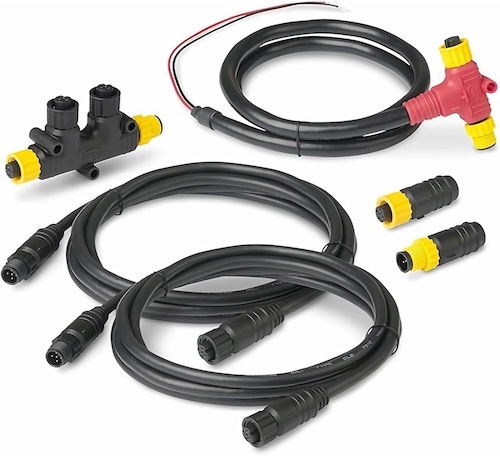 NMEA 2000 Starter Cable Kit for Marine Network Installation
The NMEA 2000 Starter Kit provides everything needed to build a reliable marine network for connecting electronics from leading manufacturers such as Garmin, Lowrance, Simrad, Yamaha, and Honda. Designed for easy expansion and seamless integration, the kit supports a wide range of marine devices including chartplotters, GPS receivers, radar systems, Fusion marine radios, transducers, and engine monitoring systems. Whether you are creating a new NMEA 2000 backbone or expanding an existing network, this kit offers a convenient, all-in-one solution.
The kit includes a 1-meter NMEA 2000 power cable with tee connector, two 2-meter drop cables, a dual tee connector, and male/female terminators for proper network operation. Constructed from high-quality rubber, plastic, copper, and steel, all components are designed to withstand harsh marine environments while providing long-term reliability. With simple plug-and-play installation, users can quickly access valuable vessel and engine data such as oil pressure, water pressure, temperature, fuel information, and more, making network setup both straightforward and cost-effective. More information...