 Loading... Please wait...

Recent Posts
CANCrocodile Contactless CAN Bus Reader – Access CAN Data Without Cutting Wires
Posted by on
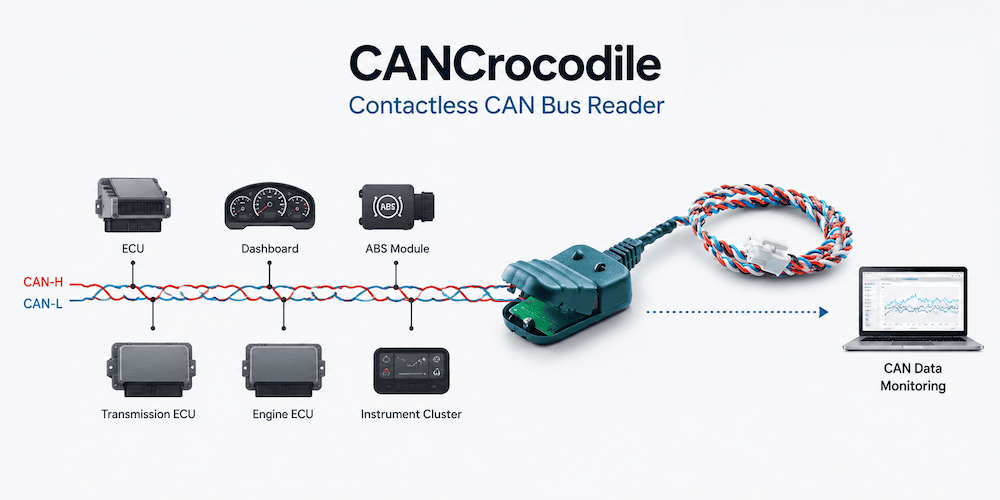 Modern vehicles, construction equipment, agricultural machinery, marine systems, and industrial equipment all rely on Controller Area Network (CAN) technology to exchange critical operational data. Whether you are developing a telematics system, logging vehicle performance, troubleshooting equipment, or monitoring fleet operations, one challenge appears again and again:
How do you access CAN bus data without modifying the wiring harness?
Traditionally, accessing a CAN network requires physically connecting to the CAN-High and CAN-Low wires, using diagnostic connectors, or installing T-taps and splice connectors. While these methods work, they often introduce concerns about warranty violations, installation complexity, reliability, and safety.
The CANCrocodile Contactless CAN Bus Reader solves this problem by providing a completely non-invasive method of reading CAN bus traffic. Instead of making an electrical connection to the network, the device reads the electromagnetic field generated by CAN communication and reconstructs the CAN messages without touching the conductors themselves.
The Problem with Traditional CAN Connections
Many engineers assume that connecting to a CAN network is straightforward. In reality, accessing vehicle data can become surprisingly difficult.
Common challenges include:
- No accessible CAN connector
- Sealed wiring harnesses
- Vehicle warranty concerns
- Restrictions from fleet operators
- Risk of wiring damage
- Need for rapid installation and removal
- Limited access to heavy-duty equipment
In fleet management and telematics applications, installers often spend significant time locating suitable connection points. Every splice, connector, or wire modification increases installation time and creates a potential failure point.
For leased vehicles, rental equipment, or customer-owned machinery, modifying the wiring harness may not even be permitted.
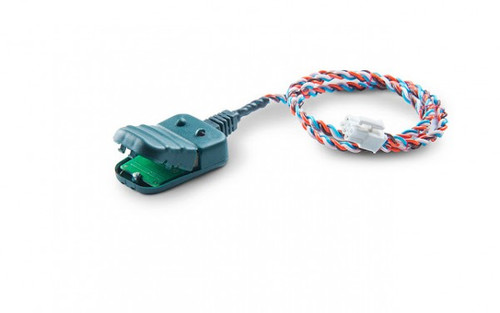 CANCrocodile - Contactless CAN Bus Reader
The CANCrocodile Contactless CAN Bus Reader is an innovative tool designed for reading CAN bus and SAE J1939 network traffic without making any electrical connection to the vehicle wiring. Instead of cutting, stripping, or tapping into the CAN wires, the device detects the electromagnetic field generated by CAN communications and converts it into a usable CAN signal. Operating in a passive “listen-only” mode, the CANCrocodile never transmits data onto the network and does not alter existing messages, making it an exceptionally safe solution for vehicle telematics, fleet management, diagnostics, and data logging applications.
The primary advantage of the CANCrocodile is its ability to access valuable vehicle data while preserving the integrity of the original wiring harness and avoiding warranty concerns. Engineers, fleet operators, and telematics providers can monitor parameters such as engine speed, vehicle speed, fuel consumption, oil pressure, coolant temperature, and many other CAN-based signals without invasive installation procedures. Its non-intrusive design reduces installation time, eliminates the risk of wiring damage, and provides a reliable method for gathering operational data from trucks, buses, construction equipment, agricultural machinery, and other CAN-enabled systems. More information..
How the CANCrocodile Works
Unlike traditional CAN interfaces, the CANCrocodile does not electrically connect to the CAN bus.
Instead, it clamps around the CAN-High and CAN-Low wires and detects the electromagnetic fields generated by data transmission. Internal electronics reconstruct the CAN messages and provide them through a standard CAN interface to the connected device.
The process is remarkably simple:
- Identify the CAN-H and CAN-L wires.
- Open the CANCrocodile housing.
- Place the wires inside the sensor.
- Close the housing.
- Connect the reader to the monitoring device.
No wire stripping.
No soldering.
No insulation piercing.
No electrical contact with the network.
Why Contactless CAN Access Matters
1. Preserve Vehicle Warranties
Many vehicle manufacturers discourage modifications to factory wiring harnesses.
By avoiding any electrical connection, the CANCrocodile provides a warranty-friendly method of accessing CAN traffic. Since the wiring remains untouched, the original electrical integrity of the system is preserved.
2. Reduce Installation Time
Traditional CAN installations may require:
- Removing dashboard panels
- Locating connector pinouts
- Accessing difficult wiring locations
- Installing splice connectors
The CANCrocodile eliminates much of this effort.
Installers can often complete the connection in minutes.
3. Eliminate Risk of Network Interference
One of the biggest concerns when connecting to a CAN network is accidentally affecting communication.
The CANCrocodile operates entirely in a passive listening mode and does not transmit messages onto the network. This means it cannot interfere with vehicle operation, introduce bus errors, or alter existing traffic.
4. Improve Reliability
Every electrical connection represents a potential failure point.
Loose connectors, poor crimps, corrosion, and vibration can all create intermittent issues.
Because the CANCrocodile does not require electrical contact with the CAN conductors, many of these failure mechanisms are eliminated entirely.
Ideal Applications
Fleet Management Systems
Fleet operators increasingly depend on vehicle data for:
- Fuel consumption monitoring
- Driver behavior analysis
- Engine diagnostics
- Maintenance scheduling
- Route optimization
The CANCrocodile enables rapid installation of telematics hardware without modifying the vehicle wiring harness.
Heavy-Duty Trucks and SAE J1939 Networks
Heavy-duty vehicles often use SAE J1939 communication networks carrying information such as:
- Engine speed
- Vehicle speed
- Fuel rate
- Engine temperatures
- Oil pressure
- Diagnostic information
The CANCrocodile is fully compatible with high-speed CAN networks including SAE J1939.
Construction and Agricultural Equipment
Construction machinery and agricultural equipment frequently operate in harsh environments where wiring harness integrity is critical.
The contactless approach minimizes installation risk while still providing access to valuable operational data.
Marine Electronics and NMEA 2000
Marine systems based on NMEA 2000 use CAN technology as their physical layer.
The CANCrocodile can be used in applications where temporary monitoring or data collection is required without modifying existing marine wiring.
Engineering and Diagnostic Work
Engineers and service technicians often need temporary access to CAN traffic for:
- Debugging
- Reverse engineering
- Performance analysis
- Data logging
The contactless design allows quick deployment and removal without affecting the original system.
What the CANCrocodile Does Not Do
The contactless concept offers tremendous advantages, but it is important to understand its intended purpose.
The CANCrocodile is designed for passive monitoring and data acquisition.
Because it does not establish an electrical connection to the CAN bus, it cannot transmit messages onto the network. As a result, it is not suitable for applications that require:
- ECU programming
- Diagnostic requests
- Active control functions
- Sending J1939 request messages
- CAN message injection
For those applications, a traditional CAN interface with a direct electrical connection remains necessary.
Supported CAN Networks
The CANCrocodile supports standard high-speed CAN networks, including:
- SAE J1939
- CANopen
- DeviceNet
- NMEA 2000
- OBD-II CAN-based systems
- Industrial CAN applications
Supported data rates typically range from 5 kbps to 1 Mbps.
A Smart Solution for Modern Vehicle Data Acquisition
As vehicles and machines become increasingly connected, access to CAN bus data becomes more valuable than ever.
Yet many organizations remain hesitant to modify factory wiring or install intrusive monitoring equipment.
The CANCrocodile Contactless CAN Bus Reader offers an elegant alternative:
- No wire cutting
- No insulation piercing
- No electrical connection
- No impact on bus operation
- Fast installation
- Reliable passive monitoring
For telematics providers, fleet operators, engineers, researchers, and system integrators, it represents one of the simplest and safest ways to access valuable CAN bus information.
If your application requires listening to CAN traffic while preserving the integrity of the original system, the CANCrocodile may be the ideal solution.
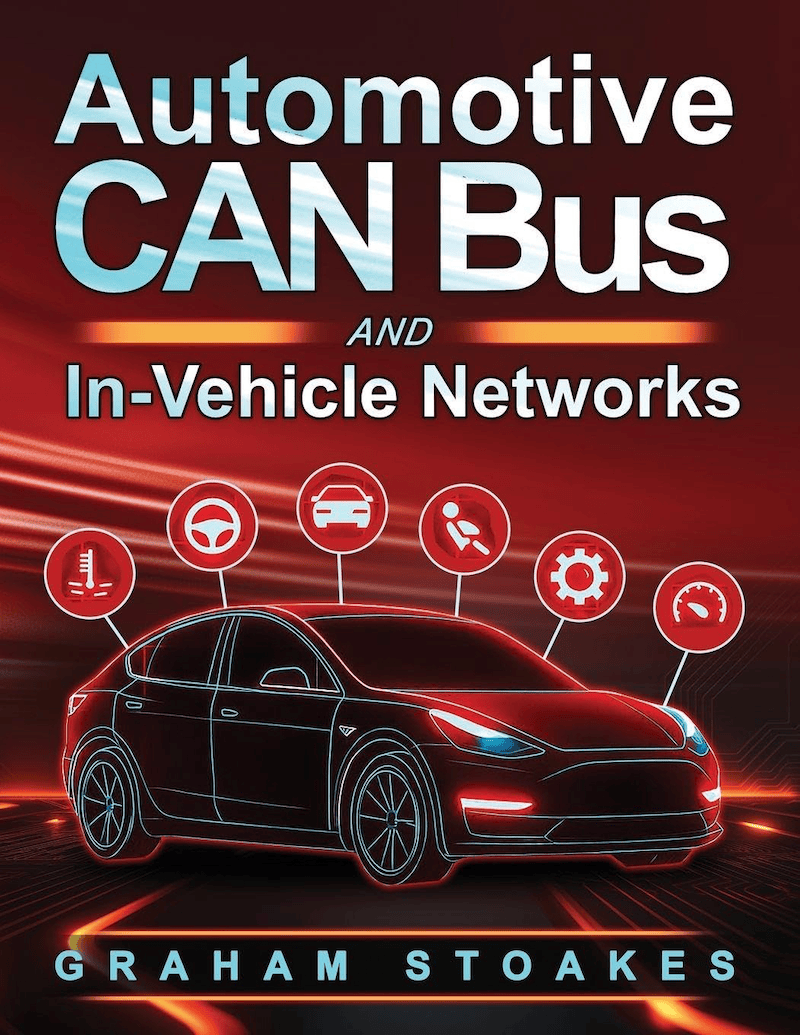 Automotive CAN Bus and In-Vehicle Networks
Today’s vehicles are more computerized than ever before. From engine management and electric drive systems to lighting, braking, infotainment, and advanced safety features, nearly every function relies on electronic communication. At the center of this digital ecosystem is the CAN Bus (Controller Area Network), a robust communication network that enables electronic control units (ECUs), sensors, and other devices to exchange information quickly, efficiently, and reliably.
As vehicle technology continues to evolve, so do the challenges faced by technicians. Modern vehicle networks have significantly reduced wiring complexity, making vehicles lighter, more efficient, and easier to manufacture. However, this increased reliance on data communication has also made fault diagnosis more demanding. Identifying a network-related problem often requires a different skill set than traditional electrical troubleshooting—particularly for independent repair shops and technicians who may not have access to expensive manufacturer-specific diagnostic tools.
This book is written for automotive technicians, students, educators, and anyone seeking a practical understanding of vehicle communication networks. Whether you are new to automotive electronics or looking to expand your diagnostic capabilities, this guide explains how CAN Bus and other in-vehicle networks are structured, how they operate, and how to diagnose network-related issues using tools that are readily available and affordable.
Inside, you will learn:
- How CAN Bus and other vehicle networks are organized and operate
- The role of ECUs, sensors, gateways, and communication protocols
- Practical techniques for diagnosing network and communication faults
- Step-by-step testing procedures using commonly available tools
- Real-world troubleshooting examples that build confidence and diagnostic skills
By the end of this book, you will have a solid foundation in vehicle network technology and a practical approach to diagnosing the communication systems that power today’s automobiles. More information...